
Solar Hybrid PCU Wiring & Earthing Guide: Wire Sizes, Panel Config & Safety Rules

Wiring decides safety. In a solar power system the PCU manages energy flow between panels, battery and load — but it is the solar PCU wiring and earthing that decides whether the system is safe, efficient and durable. This guide covers wire sizing, earthing, panel matching and back-panel wiring. Su-vastika's complete range of hybrid solar PCUs is BIS certified (Bureau of Indian Standards), assuring users that safety standards are built in.
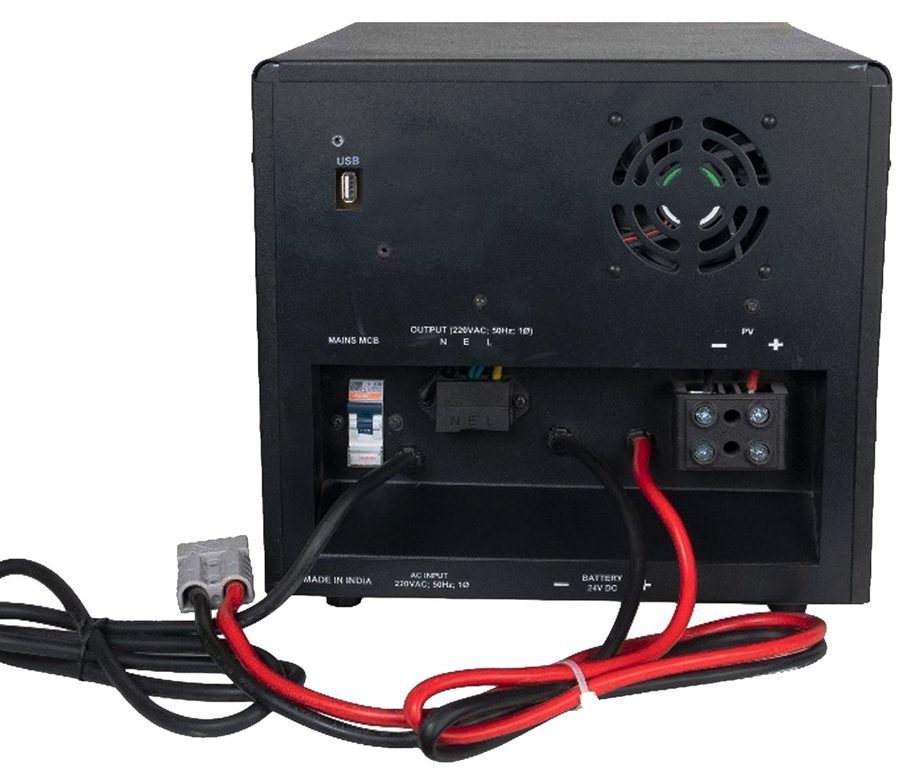
1. Why Solar PCU Wiring Matters
- Voltage drop prevention: the correct wire gauge minimises voltage drop over long runs so maximum power reaches the PCU. Undersized wires waste energy and overheat.
- Current handling: wires must carry the maximum current from panels and battery — exceeding ratings can melt insulation, start fires or damage the PCU.
- Insulation & protection: use UV-resistant, double-insulated cables outdoors, with conduits or trunking against moisture and rodents.
- Termination: tight, corrosion-free connections (MC4 connectors on panels) prevent arcing and power loss — loose connections are the single most common cause of system failure.
2. Earthing — the Most Critical Safety Parameter
Earthing protects equipment and people: it diverts lightning strikes and fault currents safely to ground, prevents shocks from exposed metal parts, and gives surge protection devices (SPDs) a path to dissipate transients. Standards such as IEC 60364 and NEC Article 250 call for earthing resistance of ≤5 ohms.
- Use GI (galvanised iron) or copper rods buried in moist soil with charcoal/salt to lower resistance.
- Keep separate earthing for solar panel frames and the PCU/inverter to avoid ground loops.
- Test earthing resistance regularly with a megger or earth tester.

3. Right Solar Panel Size, per Manufacturer Guidelines
- Voltage compatibility: panel voltage (Vmp) must sit inside the PCU's MPPT range — exceeding the voltage limit can destroy the charge controller.
- Current limits: the array's short-circuit current (Isc) must not exceed the PCU's input current rating; oversized arrays overload the system.
- Series vs parallel: series strings raise voltage (two 24V panels ≈ 48V); parallel strings raise current (use fusing/breakers).
- Temperature: panel voltage rises in cold weather — apply the temperature coefficient so a winter morning doesn't push the string over the PCU's limit.
- Follow the manual: respect the stated max PV array size (e.g. "5000W, 150V max input") and use compatible mono/poly panels for MPPT efficiency.

For the full string-sizing method, read our guide on matching solar panel and battery voltages in a solar hybrid PCU.
4. Back-Panel Wiring: Load & Grid Connections
Back-panel wiring is the configuration that connects the PCU to your load and the grid, letting the system switch seamlessly between solar, battery and grid power. Done right, it delivers:
- Efficient power management — optimal use of solar, storage and grid.
- Safety — no short circuits, overloads or electrical hazards.
- Seamless backup — uninterrupted supply during grid outages.
- Energy savings — lower grid dependency and electricity bills.
- Compliance — meets electrical safety standards such as those of the Bureau of Indian Standards (BIS).
Wiring & Earthing Quick Reference
| Parameter | Safe practice | Risk if ignored |
|---|---|---|
| Wire gauge | Thick cable sized for max current (e.g. 6 AWG on high-current paths) | Voltage drop, overheating, fire |
| Cable type | UV-resistant, double-insulated, in conduit | Insulation failure, shorts |
| Earthing | Separate rods for panels and PCU, ≤5 Ω | Shock, surge and lightning damage |
| Panel voltage | String Voc within MPPT window incl. cold-weather rise | Charge controller damage |
| Connections | MC4 connectors, torqued terminals, anti-corrosive gel | Arcing, power loss, failure |
Common Mistakes to Avoid
- ❌ Using undersized wires to save cost.
- ❌ Ignoring earthing, or sharing one rod across multiple systems.
- ❌ Overloading the PCU with oversized panels.
For complex installations, consult a certified solar technician or follow the manufacturer's design guidelines strictly. Proper wiring, earthing and panel sizing together ensure a safe, efficient and durable solar power system.

Frequently Asked Questions
Q. What wire size should I use for a solar PCU?
Size the cable to the maximum current of the path — high-current battery and PV runs typically need thick cable (e.g. 6 AWG or per the PCU manual). When in doubt, go one gauge thicker to cut voltage drop.
Q. Why does a solar system need two separate earthing rods?
Separate rods for panel frames and the PCU prevent ground loops and ensure fault or lightning current from the array doesn't pass through the inverter's earth path.
Q. What happens if my panel string voltage exceeds the PCU limit?
The MPPT charge controller can be permanently damaged. Always check Voc of the full string — including the cold-weather voltage rise — against the PCU's maximum PV input voltage.
Q. Is BIS certification important for a solar PCU?
Yes — BIS certification confirms the PCU meets Indian electrical safety standards. Su-vastika's entire hybrid solar PCU range is BIS certified.
Want a BIS-certified solar hybrid PCU?
Su-vastika's MPPT solar hybrid PCUs are BIS certified with built-in protection, lithium-ready charging and app monitoring.
Explore Products Talk to an ExpertRelated guides

From Kunwer Sachdev’s Network
Want to compare prices before you buy?
India’s independent price-comparison and buying-intelligence hub for inverters, batteries and solar — zero affiliate bias.
➤ Compare inverter & UPS prices
➤ Lithium vs lead-acid — full guide
➤ Free backup calculator (lab-tested data)
The story of Kunwer Sachdev — 76+ patents, India’s first plastic-body inverter, and the journey that brought solar into millions of homes.
➤ Pioneer timeline of firsts
➤ Video library — the work in his own voice
Disclaimer: This article is written by Kunwer Sachdev, mentor of Su-vastika. Kunwer Sachdev is no longer associated with Su-Kam Power Systems Ltd. in any capacity. Anyone dealing with Su-Kam should be aware that Kunwer Sachdev has no association with the Su-Kam brand or company.
Part of the Series
Solar PCU & MPPT Charge Controllers: Complete GuideExplore Products
Su-vastika Solar PCU
25+ patents · Made in India · 10,000+ installations