
Lithium Battery Prices Drop in India for Inverters & UPS

Lithium battery prices in India have fallen to near parity with tubular lead-acid — so for inverters and UPS, lithium now wins on price and performance (3–4× the life, a quarter of the weight, 2–3 hour charging). Here are current price ranges, a lithium-vs-tubular comparison, and FAQs.
Lithium-ion batteries are now the smart choice for inverters and UPS systems in India: longer life, deeper discharge, faster charging and far lighter weight than lead-acid. And the gap that used to hold buyers back — price — has largely closed. As global lithium prices fell on surplus output, retail lithium battery prices for inverters/UPS in India have dropped close to tubular lead-acid levels.
Lithium battery price in India (inverter / UPS)
| Battery | Capacity | Approx. price (₹) | Notes |
|---|---|---|---|
| 12V 80Ah | ~1 kWh | ₹15,000–17,000 | ~₹15–17k per kWh (was ~₹20k) |
| 24V retrofit | 2.4 kWh | ₹30,000–35,000 | Fits most existing inverters/UPS |
| 48V retrofit | 4.8 kWh | ₹60,000–70,000 | Drop-in lithium for solar/UPS |
Indicative retail ranges; actual prices vary by brand, chemistry (LiFePO4) and BMS. Su-vastika lithium batteries are retrofit-ready for existing systems. For more lithium inverter options and pricing, see lithiuminverter.in.
Before you buy, it is worth comparing live market prices across brands on InverterIndia.com — an independent comparison platform with zero affiliate bias, also run by Kunwer Sachdev.
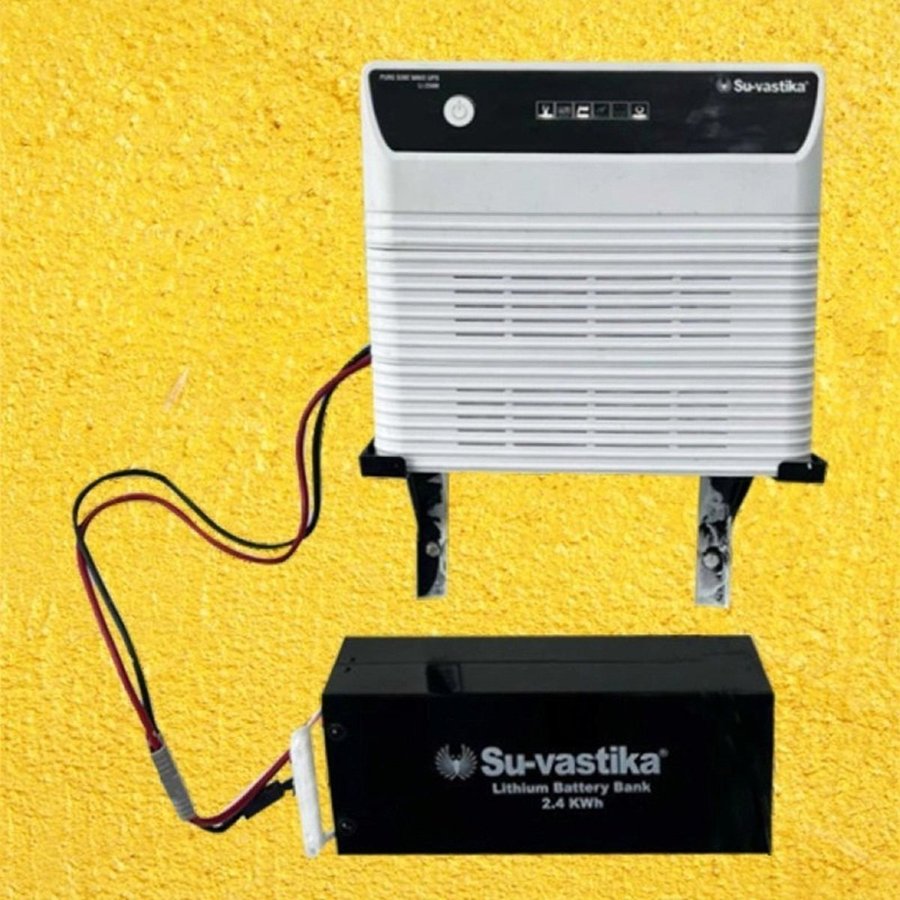
Lithium vs tubular lead-acid — full comparison
| Factor | Tubular lead-acid | Lithium (LiFePO4) |
|---|---|---|
| Cycle life | 400–500 cycles | ~3000 cycles (3–4×) |
| Weight (≈150Ah class) | ~60 kg | ~11 kg (80Ah) |
| Size | Large | ~1/4 the size |
| Charging time | 12–15 hours | 2–3 hours |
| Maintenance | Top-up distilled water | Maintenance-free |
| Usable capacity | Rated C10/C20 | C1 — full usable Ah |
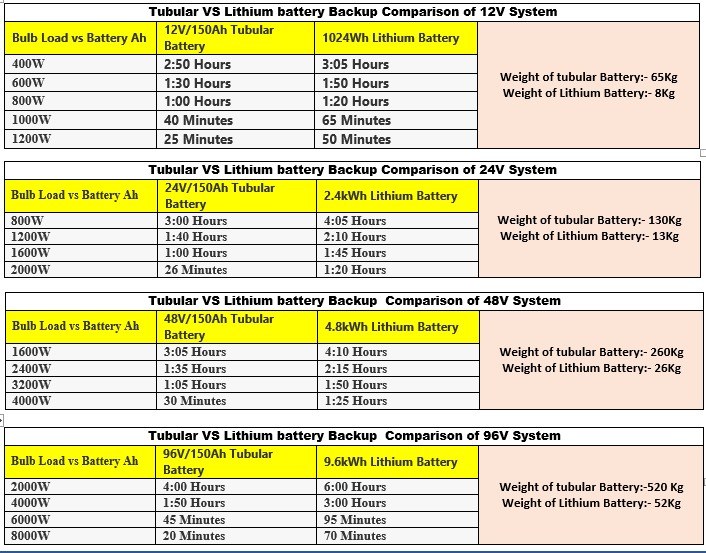
Is lithium really cheaper than tubular? The 300W rule
The honest answer is it depends on your load. For a small 12V system, a tubular battery can be cheaper to buy only up to about a 300W load. The moment the load goes above ~300W, lithium becomes the better-value choice even on first purchase — because, as the comparison chart above shows, a tubular battery loses so much usable backup at higher discharge that you’d need a much larger, costlier tubular bank to match a single lithium battery.
The crossover load scales with system voltage (same rule of thumb):
- 12V — tubular cheaper up to ~300W; lithium cheaper above ~300W
- 24V — crossover ~600W
- 48V — crossover ~1200W
- 96V — crossover ~2400W
Above these loads lithium wins on price and performance; below them tubular may be cheaper to buy — though lithium still costs less over its full life.
The 24V/48V equalization problem — solved by the BMS
Higher-voltage systems make tubular batteries harder still. At 24V and 48V you wire several lead-acid batteries in series, and over time they drift out of balance — some charge more than others. That forces periodic equalization charging and manual maintenance; if it’s skipped, the weakest battery drags down the whole bank and the life of every battery in the string falls. A lithium battery removes this problem automatically: its built-in Battery Management System (BMS) continuously balances the cells, so there is no equalization chore and no premature failure from imbalance.
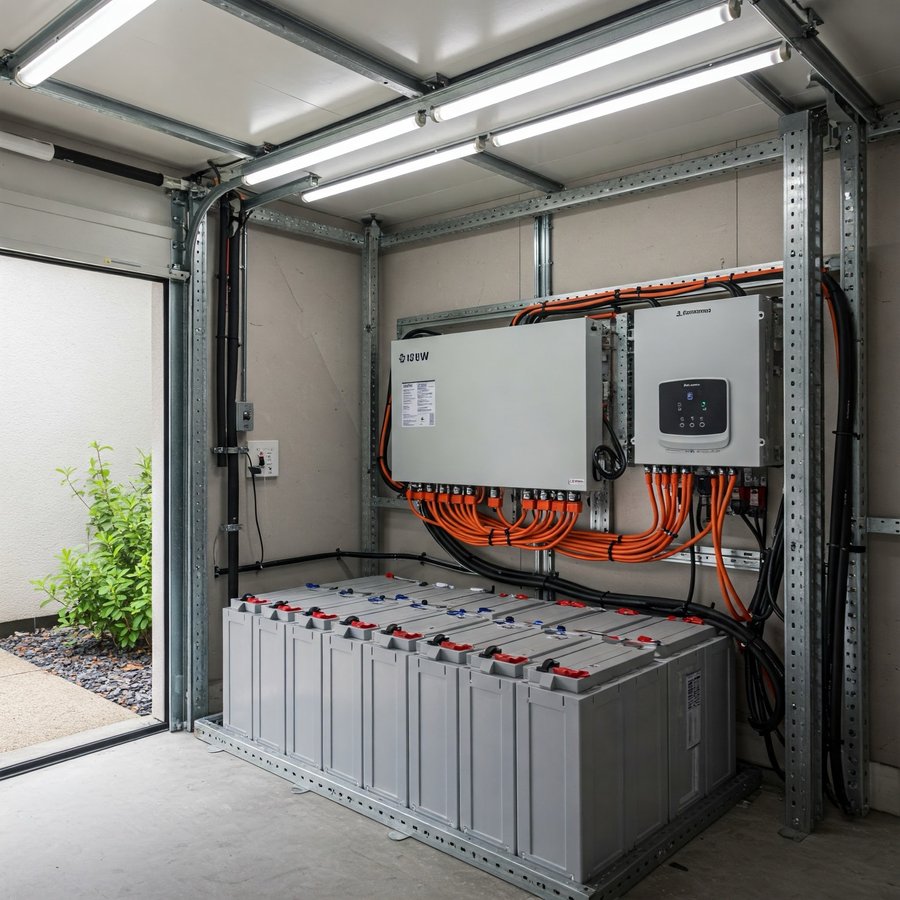
Why this matters: series imbalance is one of the biggest hidden reasons tubular banks fail years earlier than expected. In a 24V or 48V string, the chronically under- or over-charged battery degrades fastest and pulls the whole bank down with it — so the real life of a tubular 24V/48V system is often far shorter than the single-battery rating suggests. A lithium pack’s BMS keeps every cell balanced, protecting the full life of the battery.
Why have lithium battery prices dropped?
Global lithium prices fell sharply on surplus supply, and local cell sourcing plus higher volumes have brought retail lithium battery prices in India down to near tubular levels. Combined with a 3–4× longer life, the total cost of ownership of lithium is now well below lead-acid for inverter and UPS use.
Total-cost tip: a tubular battery may look cheaper upfront, but at ~400–500 cycles you replace it 3–4 times over a single lithium battery’s ~3000-cycle life — so lithium is cheaper per year of service, before counting faster charging and zero maintenance.
Frequently asked questions
Upgrade to a retrofit lithium battery for your inverter or UPS
See Su-vastika lithium batteries Get a priceRelated Su-vastika guides
- Difference between tubular and lithium battery
- C1, C10 & C20 battery capacity explained
- Lithium-ion battery compared to tubular battery
- Can you install a lithium battery with existing inverters?
Sources & news: The Hindu BusinessLine: lithium prices likely to drop further on surplus output · Business Standard: Su-vastika launches up to 500 KVA Lithium Battery UPS · lithiuminverter.in — lithium inverter & battery prices and options. · lithiuminverter.in — Top 6 EV scooter brands in India 2026: sales vs complaints, by Kunwer Sachdev

From Kunwer Sachdev’s Network
Want to compare prices before you buy?
India’s independent price-comparison and buying-intelligence hub for inverters, batteries and solar — zero affiliate bias.
➤ Compare inverter & UPS prices
➤ Lithium vs lead-acid — full guide
➤ Free backup calculator (lab-tested data)
The story of Kunwer Sachdev — 76+ patents, India’s first plastic-body inverter, and the journey that brought solar into millions of homes.
➤ Pioneer timeline of firsts
➤ Video library — the work in his own voice
Disclaimer: This article is written by Kunwer Sachdev, mentor of Su-vastika. Kunwer Sachdev is no longer associated with Su-Kam Power Systems Ltd. in any capacity. Anyone dealing with Su-Kam should be aware that Kunwer Sachdev has no association with the Su-Kam brand or company.
Part of the Series
Complete Guide to Lithium Batteries for Home Inverters in IndiaExplore Products
Su-vastika Lithium Batteries
25+ patents · Made in India · 10,000+ installations