
Best Lithium Inverter in India (2026): How to Choose the Right One
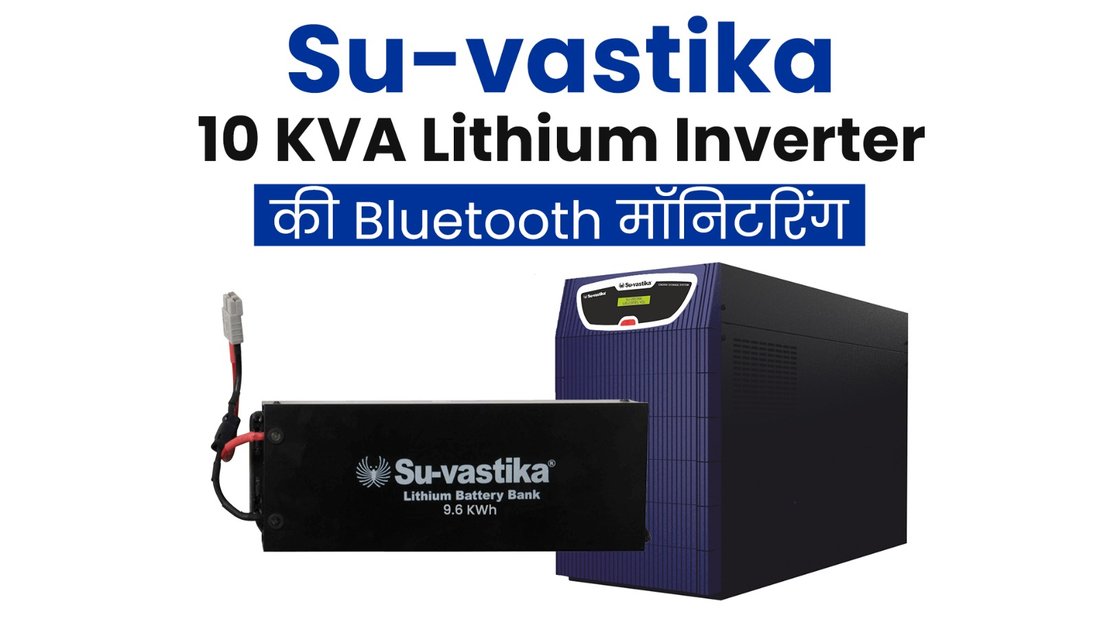
Looking for the best lithium inverter in India? Don’t just compare price — compare the things that decide how long the inverter and battery actually last: the maker’s experience and patents, the charger design, sleep mode, pure sine wave output and after-sales support. Here’s a clear buyer’s checklist, a comparison table and FAQs.
A lithium inverter is a long-term investment — the right one runs maintenance-free for years, the wrong one kills an expensive lithium battery early. So before you buy the best lithium inverter for your home or business in India, work through the points below rather than picking on price alone.
Best lithium inverter in India: the buyer’s checklist
| What to check | Why it matters | Su-vastika |
|---|---|---|
| Maker’s experience | Lithium needs proven inverter + BMS know-how | Led by Kunwer Sachdev, 30+ yrs; 15 patents |
| Sleep / standby mode | Stops deep-discharge that destroys lithium | Built-in sleep mode |
| Output waveform | Pure sine wave protects sensitive loads | Pure sine wave + isolation transformer |
| Charger design | Decides charging time & battery life | Six-stage ATC, works down to 100 V |
| Overload handling | Avoids nuisance trips on motor/AC start | Up to 6× surge capacity |
| Monitoring | See & control the system remotely | Bluetooth/Wi-Fi mobile app |
| Battery source | In-house packs = better quality & price | In-house lithium battery plant |
1. Experience & patents come first
Lithium inverters demand far more design maturity than lead-acid ones — the charger, the BMS and the protection logic all have to work together. Su-vastika is led by Kunwer Sachdev, the “Inverter Man of India,” who has built inverter and UPS technology for over 30 years, and the company holds 15 technology patents (BMS, storage and solar-storage) from the Indian Patent Office. That depth is the single biggest reason its lithium inverters last.
2. A complete range — 1 kVA to 250 kVA
The best lithium inverter is the one that fits your load. Su-vastika offers around 80 models from 1000 VA up to 250 KVA, in both single-phase and three-phase, including solar-hybrid versions and space-saving wall-mounted models for homes. To size yours, read our home inverter buying guide and C1, C10 & C20 battery capacity guide.
3. Sleep mode — the feature that saves your lithium battery
This is the most important and most overlooked feature in a lithium inverter. At low battery, both the inverter and the lithium BMS keep drawing power, which can push the pack into deep discharge. A lead-acid battery can usually be revived from deep discharge; a lithium battery often cannot — deep discharge is the end of its life. A proper sleep/standby mode (built into Su-vastika inverters) shuts that drain off and protects the battery.
4. Pure sine wave + isolation transformer
A pure sine wave output matches grid power, so it runs sensitive electronics (TVs, computers, medical devices) safely and without the hum and heat that modified/square-wave inverters cause. Su-vastika adds an isolation transformer, so the output is electrically isolated from the input — an extra layer of protection for your appliances.
5. Charger design: six-stage ATC & 100 V charging
The charger decides charging time and battery life. Su-vastika uses a six-stage charger with Automatic Temperature Compensation (ATC) and keeps charging down to as low as 100 V — vital where mains voltage sags. The full detail is in our guide to inverter/UPS charging: capacity, time, ATC & battery life.
6. Overload capacity & smart monitoring
Motors, pumps and ACs draw a big surge at startup. Su-vastika inverters are rated to take overload up to 6× for a short surge, preventing nuisance trips. And the Bluetooth/Wi-Fi mobile app lets you monitor and control the inverter, battery and overload status from your phone — even when you’re away.
7. In-house battery & honest pricing
Su-vastika manufactures its lithium battery packs in-house, which improves quality control and keeps pricing competitive. And with lithium prices having fallen close to tubular levels, the value gap has narrowed sharply — see lithium battery prices in India and our retrofit lithium battery guide if you want to upgrade an existing inverter.
Frequently asked questions
Want the best lithium inverter sized right for your home or business?
See Su-vastika lithium inverters Talk to usRelated Su-vastika guides
- Inverter/UPS charging explained: capacity, time, ATC & battery life
- C1, C10 & C20 battery capacity explained
- Lithium battery prices in India
- Retrofit lithium battery guide
- Home UPS & inverter buying guide India
Su-vastika in the news: Business Standard — Su-vastika launches up to 500 KVA Lithium Battery UPS · lithiuminverter.in — lithium inverter & battery prices and options.

From Kunwer Sachdev’s Network
Want to compare prices before you buy?
India’s independent price-comparison and buying-intelligence hub for inverters, batteries and solar — zero affiliate bias.
➤ Compare inverter & UPS prices
➤ Lithium vs lead-acid — full guide
➤ Free backup calculator (lab-tested data)
The story of Kunwer Sachdev — 76+ patents, India’s first plastic-body inverter, and the journey that brought solar into millions of homes.
➤ Pioneer timeline of firsts
➤ Video library — the work in his own voice
Part of the Series
Complete Guide to Lithium Batteries for Home Inverters in IndiaExplore Products
Su-vastika Lithium Batteries
25+ patents · Made in India · 10,000+ installations